Explore the best places


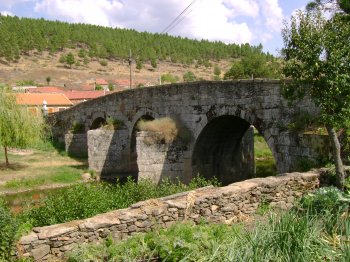
Ponte de São Joanico
- heritage
Rua do Cruzeiro
5230, Vimioso
Trestle Board bridge built in the middle ages and rebuilt in 1778. It is based on five arches back perfect unequal, highlighting a tile Panel with the image of St. John.
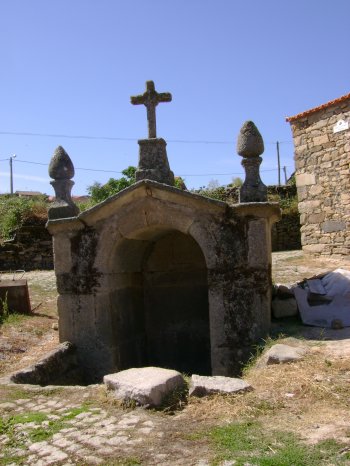
Fonte da Andoia
- heritage
Largo da Fonte de Andoia
5230, Vimioso
Foursquare source built in the modern age, whose access is via two lateral steps. This is a diving source covered by a structure of slabs in barrel vault.
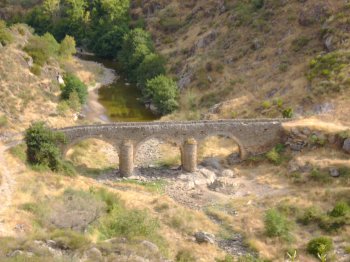
Ponte de Algoso
- heritage
Algoso
5230, Vimioso
Pedestrian bridge located over the river Angueira, to present a horizontal Board with a ramp, based on three round arches. It was built in medieval times, destroyed by a flood in 1907 and then rebuilt in 1727\/1738.
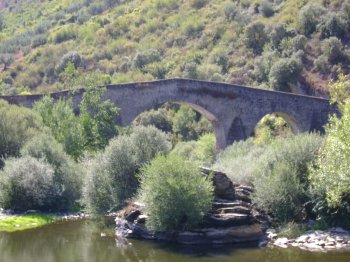
Ponte de Santulhão
- heritage
EN317
5230, Vimioso
Trestle bridge located over the river Sabor consisting of five unequal arches, being the central and two on the right side and round, both on the left side broke. Currently, only has pedestrian circulation. It was built in the middle ages and reconstructed in the modern age.
Museu de Lisboa - Teatro Romano
- heritage
Rua de São Mamede, 3-A
1100-532, Lisboa
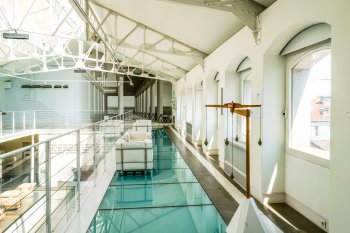
This Roman Theatre Museum, opened in 2001, shows what was the theatre of the ancient city of Olisipo. Is housed in a 17th century building, which has been refurbished over the centuries. The Museum encompasses multiple areas where you expose archaeological remains and traces which refer not only to the time of Theatre (1st century), but also for other traces which bear witness to an intense human occupation of this site.
Museu de Lisboa - Santo António
- heritage
Largo de Santo António à Sé, 22
1100-499, Lisboa
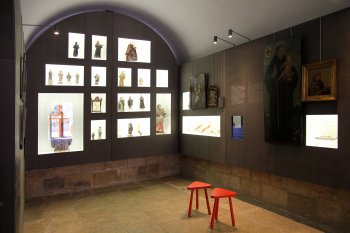
This small museum, placed close to Igreja de Santo António (Santo António Church), presents a collection of engravings, paintings, sculptures, ceramics and liturgical ornaments that evoke the patron saint of the city. Gold and silver objects decorate the space.
Museu de Lisboa - Palácio Pimenta
- heritage
Campo Grande, 245
1700-091, Lisboa
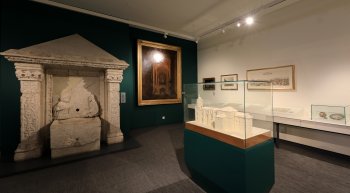
Placed at the Palácio Pimenta, a manor dated from the early XVIII century; in this space you may see archaeological pieces, paintings, drawings, engravings and lapidary that illustrate the city of Lisbon, since the prehistoric period till nowadays. Among the works in exhibition the “O Fado”, by José Malhoa and a oil-painting of Dirk Stoop stand out. The earthquake of 1755 is here shown with images of devastation and reconstruction projects.
Casa dos Bicos / Fundação José Saramago
- heritage
Rua dos Bacalhoeiros, 10
1100-135, Lisboa
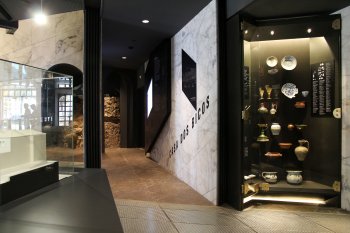
This building, which façade is made of diamond shaped stones, is quite unique. Its construction is from the beginning of the XVI century, inspired in two Italian palaces: the Diamond Palace (Ferrara) and the Bevilacqua (Bologna).
Pelourinho de Algoso
- heritage
Largo do Pelourinho
5230, Vimioso
This is a Manueline pillory composed by a prismatic shaft decorated with finials, a four arms capital and, on the top, a cross and a prismatic finishing with the armillary sphere.
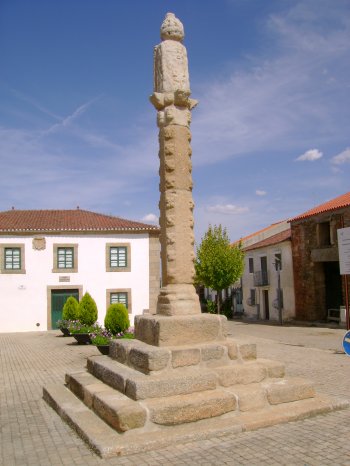
Pelourinho de Vimioso
- heritage
Largo Mendo Rofino
5230, Vimioso
This medieval pillory made with a square platform with three steps, a prismatic shaft, a four arms capital and finished with a pyramid trunk.
