Explore the best places
Heritage in Portugal


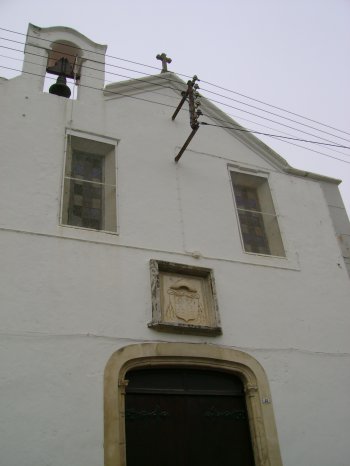
Ermida de Santo André
- heritage
Rua de Lisboa, 74
7800-292, Beja
According to tradition, this hermitage was founded by King Sancho I to commemorate the capture of Beja from the Moors in 1162. The ogival reconstruction, however, dates from the 15th century. It is part of the group of Gothic-Mudéjar constructions, typical of the Alentejo region, highlighting the narthex, the conical pinnacles and the battlements.
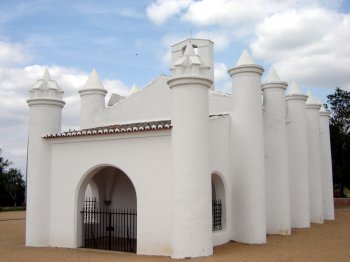
Arco Romano de Beja
- heritage
Rua de Dom Dinis, 1
7800-305, Beja
Possibly built between the 1st and 4th centuries AD, this arch is supported by two towers and is integrated into the medieval castle, outside the citadel. Also known as the "Évora Gate," its main function was to provide access to the barbican that surrounds the keep.
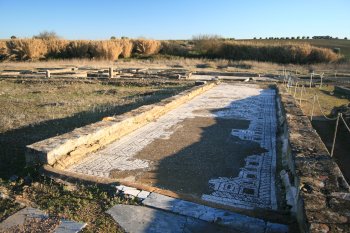
Villa Romana de Pisões
- heritage
Beja
7800, Beja
A village with artifacts dating back to the 1st century AD, containing traces of numerous quadrangular divisions of varying sizes arranged around an atrium.
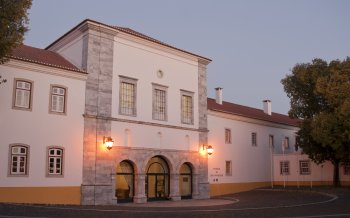
Convento de São Francisco / Pousada de Beja
- heritage
Largo Dom Nunes Álvares Pereira
7800-018, Beja
Located outside the city walls, next to the old road that connected Beja to Mértola, it was founded in the 13th century. It underwent profound changes, mainly in the 18th century, which practically gave it its current appearance. The Chapel of the Tombs, the Cistern, the paintings in the Chapter Room, and the Upper Choir are particularly noteworthy. It is currently part of the Pousadas de Portugal network.
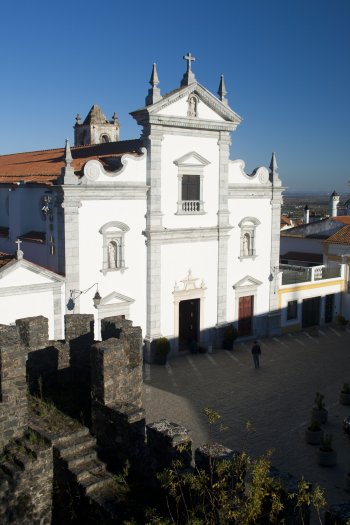
Sé Catedral de Beja / Igreja de São Tiago
- heritage
Largo do Lidador, 7
7800-265, Beja
This 16th-century building retains its hall-church structure. The church stands out for its large dimensions, the creation of a unified space, and the influence of formal solutions taken from treatises that recall one of the elaborate creations of the Plain Architecture in the south of the country. Inside, some proto-Baroque altars and a set of paintings by André Reinoso deserve special mention. Also, noteworthy are the gilded and polychrome altarpieces, the tile panels, and the statuary. It was rebuilt in 1590 on the site of the original church of Santiago Maior.
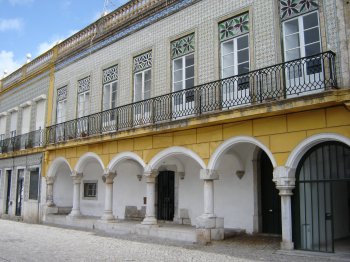
Arcadas da Praça da República
- heritage
Praça da República, 10
7800-427, Beja
A place of great historical interest, located in one of the main squares of the city of Beja. The Manueline arcades give it a unique beauty. These 16th-century galleries are characterized by the constant activity that takes place there.
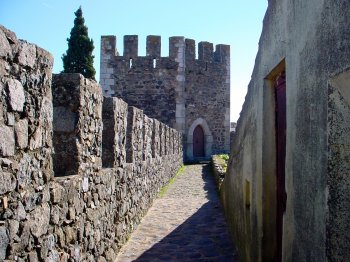
Castelo de Beja
- heritage
Largo Dr. Lima Faleiro
7800-265, Beja
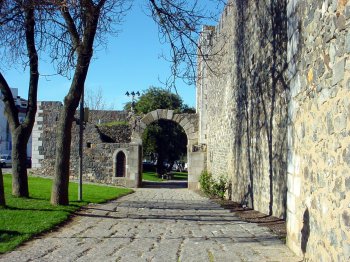
Of the castle complex, the Keep stands out – almost 40 meters high – dating from the time of King Dinis, made of marble, with a twin window and a machicolated balcony surrounding it. A masterpiece of military architecture, the Tower of Beja has great historical and monumental value. Of the defensive constructions of Roman origin, only the arch of the Porta da Vila (Town Gate) and the arch of the Porta de Évora (Évora Gate) remain. The Porta da Moura (Moorish Gate) is the only vestige of the medieval fortification.
Centro Histórico de Beja
- heritage
Praça da República
7800-427, Beja
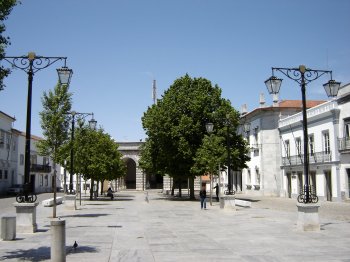
In the city's historic center, noteworthy landmarks include Praça da República, Largo de Santa Maria, Arcos dos Prazeres, Rua Aresta Branco, Rua dos Infantes, Rua do Touro, Rua da Guia, Rua dos Pintores, Rua Manuel de Arriaga, Rua da Ancha, and Rua Abel Viana. Numerous monuments of great architectural and heritage value can be admired here.
Museu Regional de Beja / Museu Rainha Dona Leonor
- heritage
Largo da Conceição
7800-131, Beja
The museum is housed in the Convent of Our Lady of the Conception, founded in 1459 by the Infantes D. Fernando and D. Brites. Highlights include the 17th-century Portuguese tiles, the 16th-century Sevillian tiles, and the Baroque vault of the Chapter Room. Also, noteworthy are the paintings produced in Portugal, Spain, and Holland between the 15th and 18th centuries, the Roman section, and the collection of large classical capitals from the Forum of the Ancient Pax Julia (Roman Beja).
Capela do Senhor dos Passos
- heritage
Rua Mouzinho de Albuquerque, 25
2070-104, Cartaxo
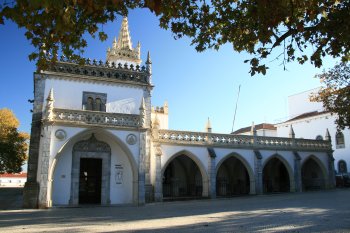
It has a peculiar location, as it is surrounded by two houses on a street close to the main church and the city center. Built in the 16th century, this chapel, of Manueline religious architecture, is attached to a manor house with internal communication through the upper choir. Its most notable features are the quartered coat of arms, the 16th-century portal, the triumphal arch, and the coffered vault. In 1808, it is believed to have sheltered Junot's troops during the French Invasions.