Explore the best places
Results for castelo in Portugal


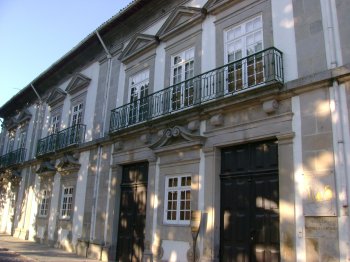
Casa dos Viscondes de Geraz do Lima / Edifício do Instituto Politécnico de Viana do Castelo
- heritage
Praça General Barbosa, 44
4900-347, Viana do Castelo
The date of construction of this building is not known, however, it is known that, in 1862, was here founded the College of our Lady of Agony. After House other schools settled here the Instituto Politécnico de Viana do Castelo, which still works.
Castelo Medieval - Porta do Sol
- heritage
Rua do Castelo, 12
3640-231, Sernancelhe
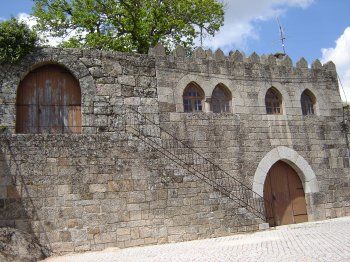
It is at the top of a hill that we find the remains of the walls of Sernancelhe Castle. This rock castle dates back to the 12th/13th centuries, featuring an irregular circular plan. Don't forget to pay attention to the Porta do Sol, with its full arch. Very close by, we find the Cruzeiro do Senhor dos Aflitos.
Castelo Velho de Freixo de Numão
- heritage
Aldeia de Numão
5155-617, Freixo de Numão
Monument located in a tall and imposing, standing out as a viewpoint. The recent excavation campaigns confirm the existence of a settlement the centuries III and II century BC (copper and Bronze Ages). It is not known, however, if it was a fortified village or just a place monumentalizado.
Castelo da Vila de Atouguia da Baleia
- heritage
Atouguia da Baleia
2525, Atouguia da Baleia
Castle of oval plant, with a donjon and ramparts. It lies next to the sea and had the objective of protecting the harbour.
Castelo de Avô e Ermida de São Miguel
- heritage
Rua do Castelo, 10
3400, Avô
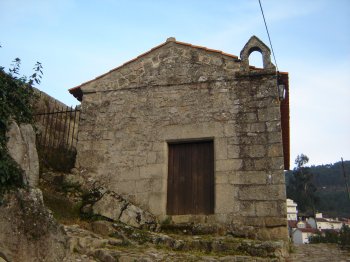
The castle sits on the banks of the Alva River, with a wall measuring 3.50 meters high and 2.70 meters wide. It was built in the 13th century and rebuilt in the 14th century. Next to the gate is the Chapel of São Miguel, with a nave featuring a projecting, vaulted chancel with two side niches.
Castelo de Penamacor e Torre de Vigia
- heritage
Largo de Santa Maria
6090-516, Penamacor
All that remains of this castle are the watchtower, the clock tower (which appears to have been a keep), some sections of the walls, ruins of bastions, and the town gate beneath the former Domus Municipalis. The town of Penamacor is part of a region once inhabited by Romans, Goths, and Arabs, and received its first charter in 1209, granted by Dom Sancho I.
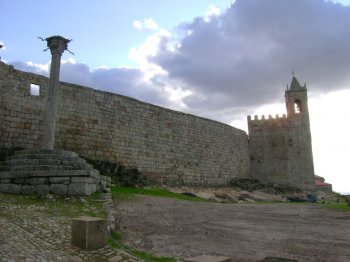
Castelo de Santa Maria da Feira
- heritage
Alameda Doutor Roberto Vaz Oliveira
4520-141, Santa Maria da Feira
A Gothic castle, imposing and austere, where the summit towers with spires and four pinnacles stand out as ornamentation. The walls are protected by crenellated embrasures and loopholes. Outside the walls, it is worth visiting the Chapel of Our Lady of the Incarnation and the Chaplaincy House, in 17th-century Baroque style. The population moved to the vicinity of the castle attracted by the trade of goods that took place there, giving rise to the current city.
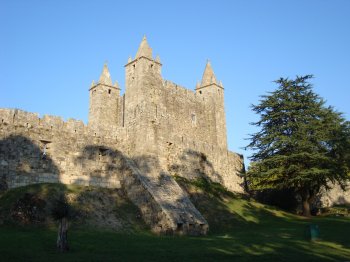
Castelo de Seda / Fortificações de Seda
- heritage
Escadinhas do Ribeirinho
7440-225, Seda
Urban fence built by King Afonso Henriques, in 1160, over traces of Roman occupation. It maintains three keeps, with the irregular termination of the structure being evident.
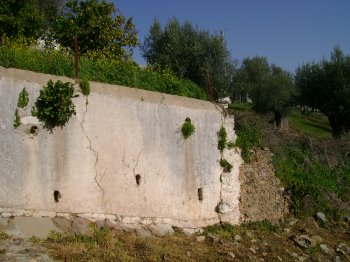
Castelo de São Filipe / Forte de São Filipe
- heritage
Estrada Castelo de São Filipe
2900, Setúbal
Located about 1 km from Setúbal, the fortress stands overlooking the sea. Without any towers, the fortress contained a group of buildings, most notably the governor's residence and the church. The interior of this church is covered with tile panels dating from 1736, depicting scenes from the life of St. Philip.
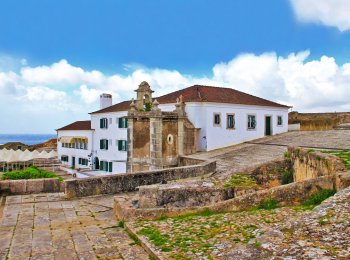
Castelo de Vila Nova de Cerveira
- heritage
Largo de São Sebastião, 1
4920-264, Vila Nova de Cerveira
Located on a hill, this oval castle retains the curtain wall of the bastion of the angel São Miguel. It was built in 1320, by order of King Dinis, to defend the newly created village of Cerveira. Several monuments stand out from the intramural set, namely the pillory, the church and the chapel. The fortifications built in the 17th century were destroyed with urban growth. In the 19th century, the growth of the town sacrificed a large part of the fortification, with the Keep and the north wall disappearing. In the following century, after being classified as a National Monument, …